Business Analysis Case Study
iBike Ride – Cycling Safety App
A cycling safety concept that turned user concerns about commuting risk into clear product requirements, journey maps, user stories, and prototype direction.
Requirements Gathering
User Stories
Journey Mapping
Figma Prototype
UAT
App Store Release
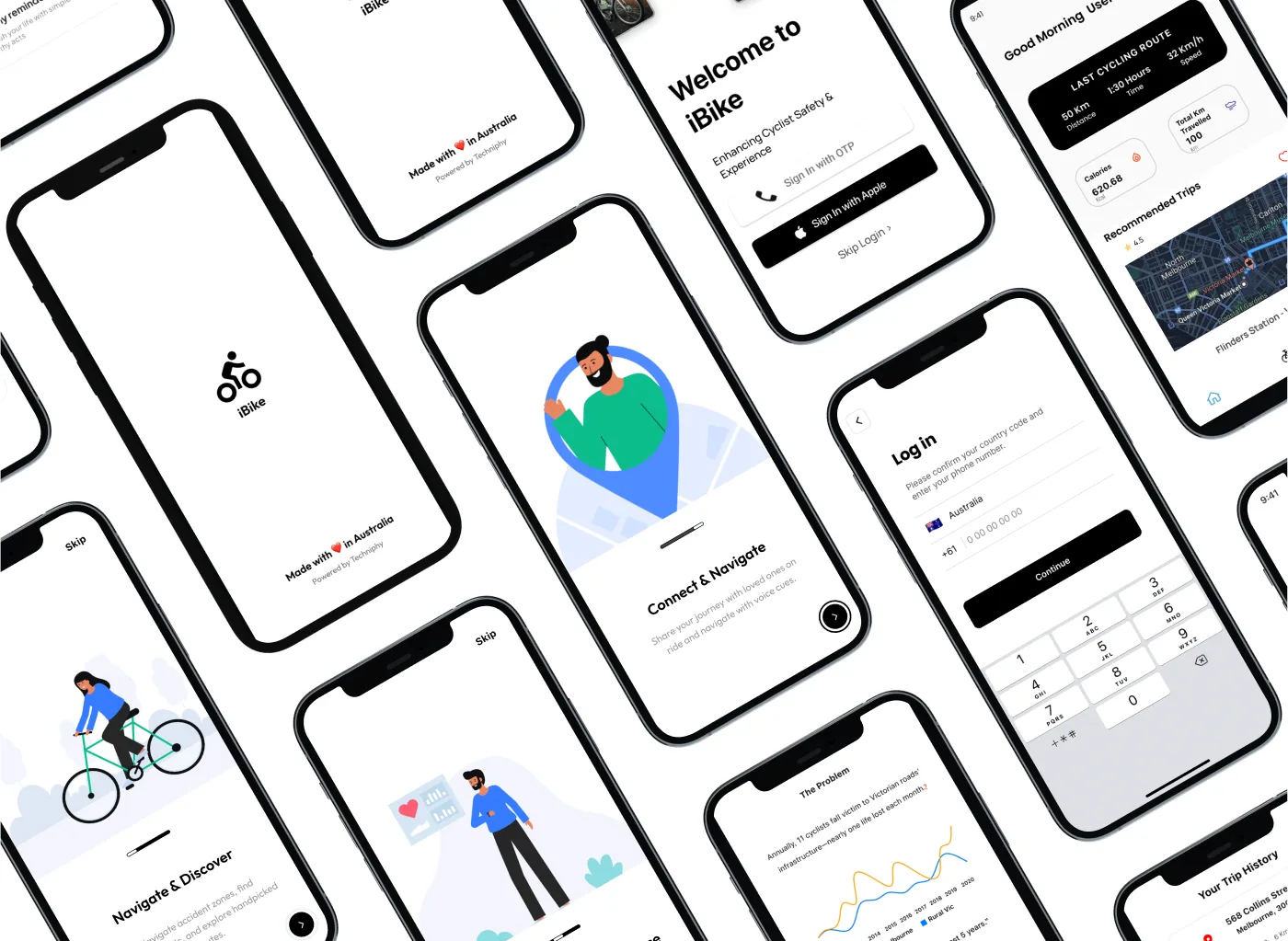
Problem
In Melbourne, shared roads and insufficient bike lanes contribute to accidents and fatalities every year.
Urban cyclists faced unsafe routes, no real-time way to share a ride with someone who cares, and no warning about the risky stretches ahead. the full problem framing is on Medium.
Outcome
A broad public-safety problem became a released product: three prioritised safety features, a story-level backlog with acceptance criteria, UAT signed off, and an App Store release. It is no longer in active development.
What I did
- User needs from interviews and surveys.
- User stories with acceptance criteria.
- Personas and journey artefacts.
- Sprint delivery and Figma prototype direction.
Approach
Started from the safety concerns riders raised and worked backward into scope: map the ride, find the moments of uncertainty, keep only the features that answer them, and make the result delivery-ready.
Artefacts
User stories and acceptance criteria
I helped break the concept into smaller, testable features so the team could align on what should be delivered first.
Feature prioritisation
Prioritisation kept the scope centred on accident-zone alerts, trusted contact sharing, and safety notifications rather than adding unnecessary complexity.
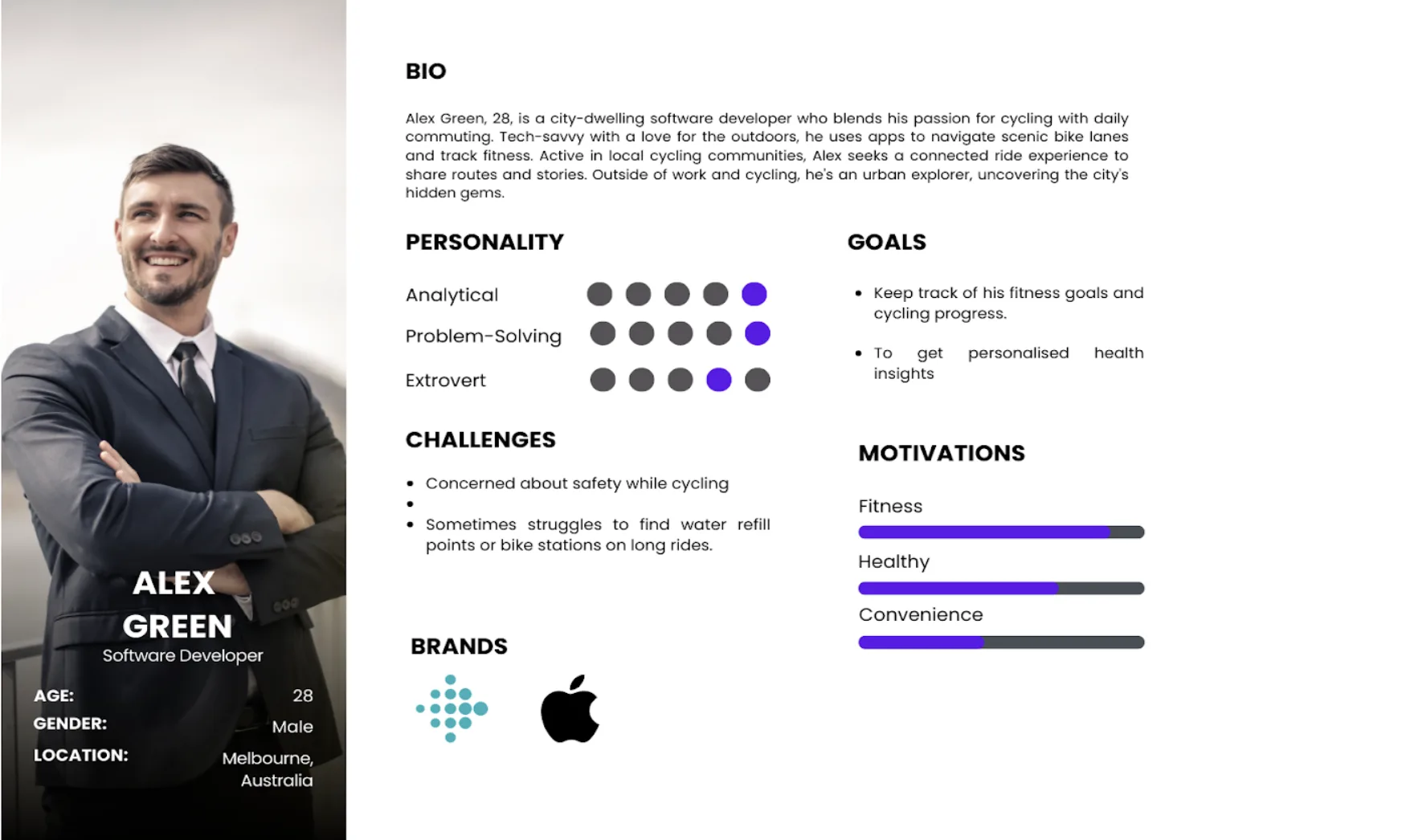
Persona
Used to keep the solution aligned to practical rider concerns and behaviour.
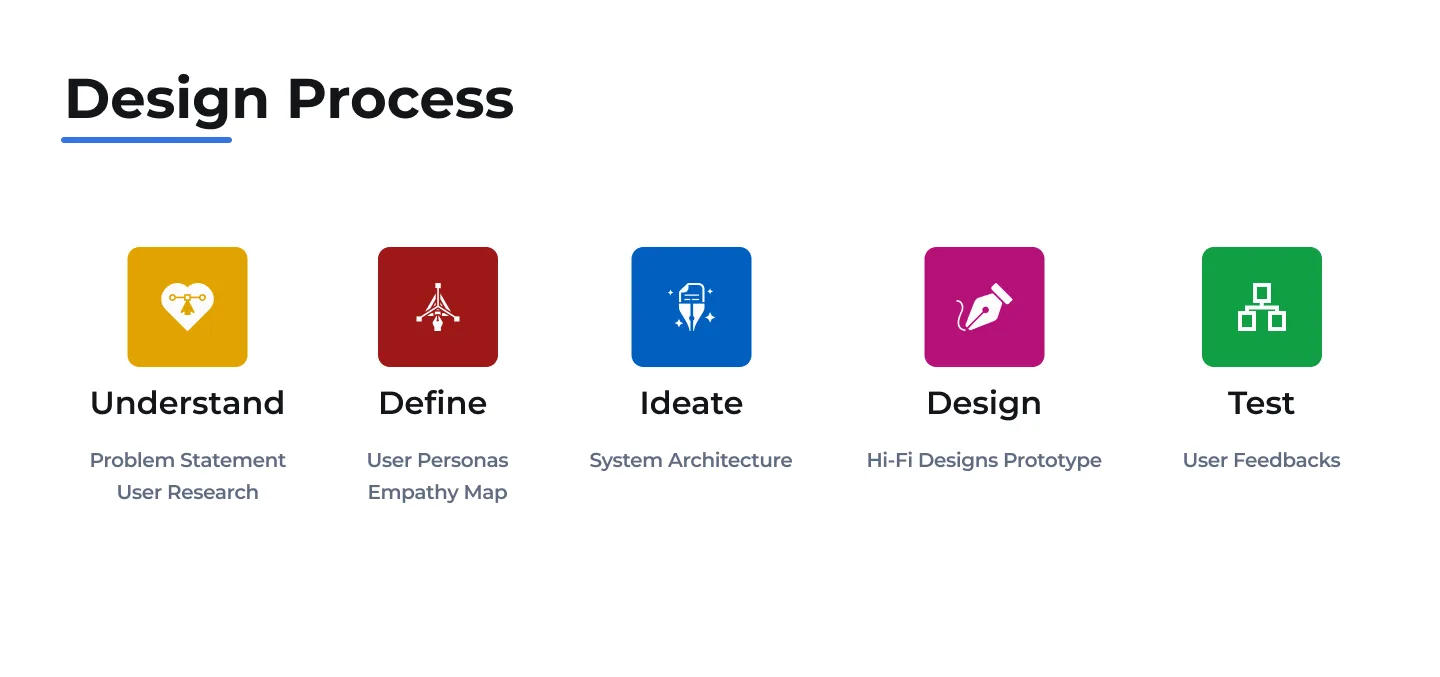
Journey and design process
Connected the user problem to solution logic and app flow decisions.
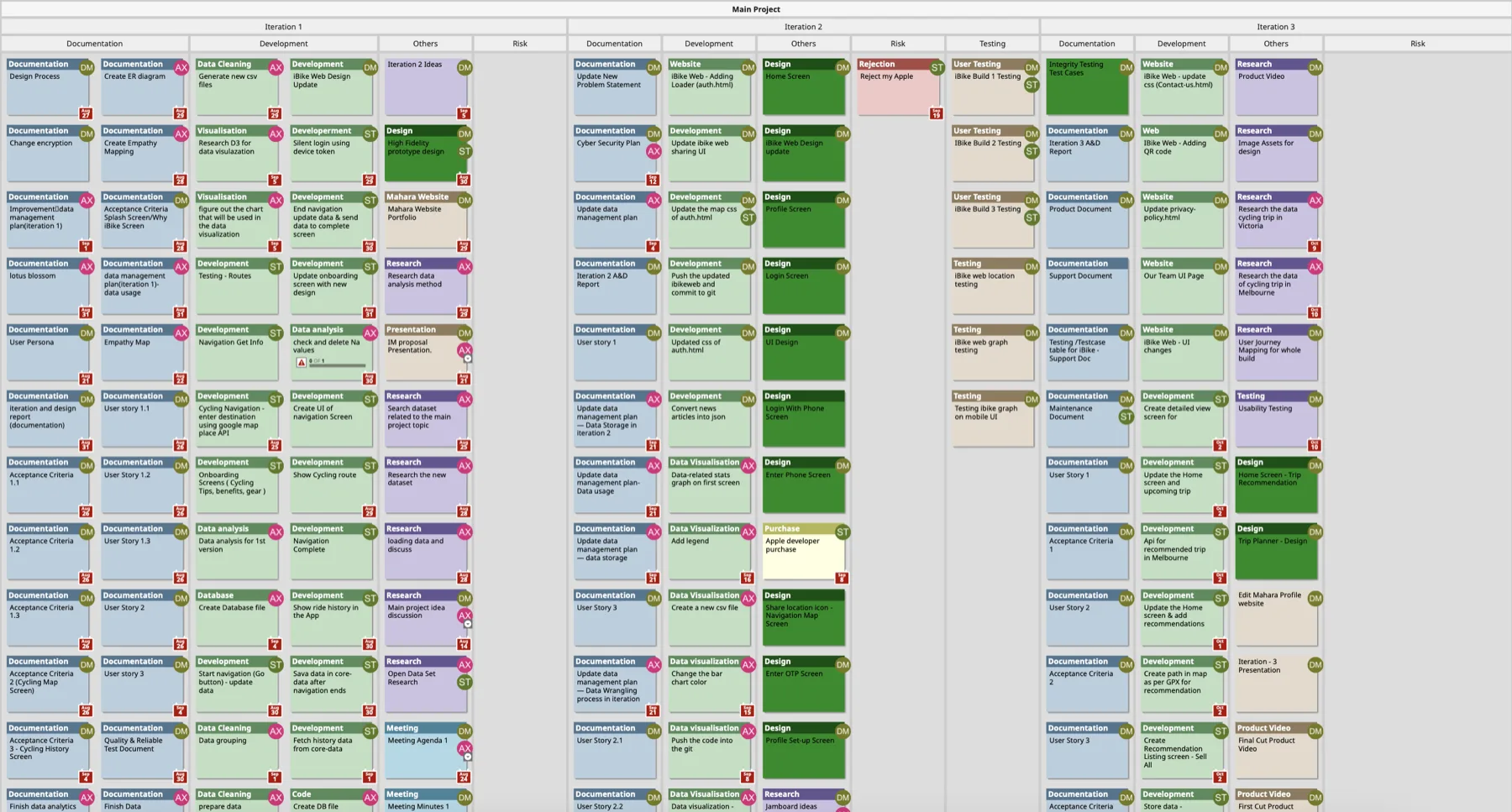
Sprint and backlog view
Helped organise the work into a clearer sprint and delivery structure.
Figma prototype screens
Showed how the safety features would appear in a mobile product flow.
Recommendation
The proposed solution focused on the rider's moment of need.
What I learned
- Wide problem spaces demand hard prioritisation.
- Journey thinking matters most when the user is under pressure.
- Structured requirements are what turn a concept into a prototype.